

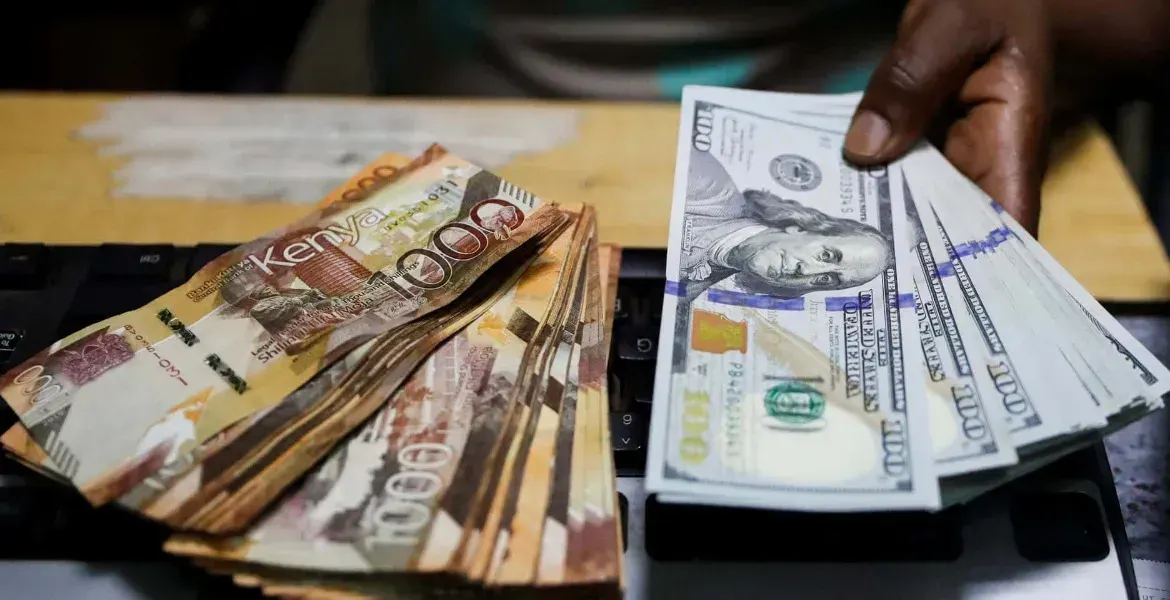
The diaspora already buys government paper through local banks. What it lacks is a channel into enterprise with visible terms, visible risk and a voice at the table, funded from voluntary savings after the fees are paid.
Consider a Kenyan working in London who sends money to a sister in Nakuru. The instruction is simple. Pay the school fees. When the school receives the money, the sender's purpose is fulfilled. He checks his phone for confirmation and returns to his shift. He will not think about that money again until the next term.
The money does not stop when he does. It leaves the school's account as the teacher's salary, the caterer's invoice and the diesel for the bus. It passes through tills and mobile wallets and, at the close of each day, lands in bank accounts. A private instruction has acquired a public afterlife. This paper follows it because it ends up somewhere the sender wasn't told about, and the last party to collect it is the Kenyan state.
The money that cannot say no
I call this kind of money disinterested capital: a capital relationship whose provider can secure the return it seeks without the receiving economy having to become more productive. The sender's return is a child in class, a parent on treatment, a household through another month. He is paid in full as soon as the fees clear. Kenya's productivity can rise or fall, and the money will come anyway. It is the only capital relationship in the country that no downturn can cancel, because the fees fall due in a downturn too.
That is why it cannot say no. The sender cannot refuse, because his sister will not ask twice. The state cannot refuse either, as we shall see, because it never has to ask at all.
The scale is now public record. The Central Bank of Kenya counted US$5.04 billion in remittances in 2025, about KSh650 billion, and calls them the country's largest and most stable source of foreign exchange. They exceed foreign direct investment. They exceed official development assistance. A household survey published by the Central Bank and the Kenya National Bureau of Statistics in June 2026 put the true figure even higher, at KSh1.15 trillion over the year to May 2025, once in-kind transfers and informal channels were counted. One in five receiving households lives on this money as its main source of livelihood. The diaspora is, by some distance, Kenya's largest capitalist. It does not know this, and it has never been asked what it wants done with the money.
Three doors into the Treasury
The first door is tax. The sister pays the fees. The school pays the teacher. The teacher buys cooking oil and airtime, and the Kenya Revenue Authority takes value-added tax at the till and excise on the airtime. School fees themselves are exempt. The remittance is taxed on its second and third uses, but never on the first. No line in the budget calls it remittance revenue. It arrives as consumption tax, which is the name the Treasury gives to the diaspora's contribution.
The second door is the deposit. The household survey found that banks receive 43.7 per cent of remittances directly, and mobile money another 33 per cent, and mobile money balances sit in trust accounts at the same banks. In 2025, customer deposits in Kenya's banks grew from KSh5.5 trillion to KSh6.1 trillion. The diaspora sent about KSh650 billion through formal channels in the same year. No one can trace one shilling to the other, and banks create deposits when they lend, so the two figures aren't the same money. But a deposit that began in Nakuru is the kind a bank prizes. It does not ask for a loan in return. It does not leave on bad news. If it is paid for at all, it is at the rate of a savings account.
The third door is what the bank does with it, and this is where the structure shows. By December 2025, Kenya's banks held KSh2.5 trillion in government securities, up KSh384.5 billion, or 18.2 per cent, in a single year. Loans and advances to customers grew 6.6 per cent. Government paper was 29.9 per cent of the sector's net assets. Interest earned on loans to customers fell 7.6 per cent, from KSh536.1 billion to KSh495.6 billion. Interest earned on government securities rose 9.1 per cent to KSh284.4 billion from KSh260.7 billion. The year before, credit to the private sector shrank by 1.4 per cent, while the public sector's share of all bank credit climbed from 30 per cent in 2020 to 34 per cent in 2024.
So the chain closes. The fees become the teacher's deposit. The deposit becomes the bank's liquidity. The liquidity becomes a Treasury bill. The state does not borrow from the diaspora. It borrows from the banks whose deposit base the diaspora helps to fill, and it pays the coupon to the bank, not to the man on the London shift.
What the money became
This site asks every flow a simple question. Of the money that came, what did it become? Follow each party's return and the answer is in front of you.
The sender was paid in full the day the fees cleared. The bank was paid a coupon, on a sovereign book that earned more each year and a lending book that earned less. The state was paid in shillings, now, by a lender that demanded no collateral, no business plan and no vote. Each of the three secured the return it was after. Not one of them needed a workshop in Nakuru to hire one more person. That is the definition of disinterested capital, and here it is met three times over in one chain of transactions.
Only the workshop that needed a loan depended on Kenya becoming more productive. It did not get a seat at the table. Banks' income from lending to it fell.
Albert Hirschman would recognise the sender's position. He has no exit, because the fees are due. He has no voice, because he does not vote on the Finance Bill and he is not at the auction. What remains is loyalty by default, and loyalty by default is the cheapest and most patient money in any financial system. It has been lent, through two intermediaries, to the one borrower in Kenya that never has to become more productive to repay. The state can refinance. The workshop cannot.
Two cautions are owed. Tax receipts belong to the budget and are spent. Borrowing carries a repayment obligation, and in Kenya a growing share of new domestic borrowing services earlier domestic borrowing. Neither is the same thing as foreign exchange reserves. The dollars the sender bought his shillings with sit with the bank or with the Central Bank, and the Treasury cannot spend them. The connection between the remittance and the state is institutional. It runs through tax law, bank regulation and the auction calendar, and its strength is a choice.
The honest counter-case is also owed. If the Treasury bill built the road that carries Nakuru's produce to market, the chain closes well, and public borrowing was the foundation of private enterprise. Capital composition is not the villain. The dominance of one composition is. When the bank earns more on the sovereign than on the workshop, year after year, the lending expertise follows the money, and a country ends up with a financial system that is very good at funding its government and out of practice at funding anything else.
What follows
The policy task is not to redirect the school fees. The fees are sacred and must remain so. The task is to change what the bank does with the deposit after the fees are paid, and that comes down to three decisions.
The first is the state's. It must stop treating the country's deposit base as its overdraft. A government that borrows faster from its banks than those banks lend to its businesses, year after year for a decade, has made a choice, and the choice has a number. The number is 34 per cent and rising. A ceiling on net domestic borrowing growth below private credit growth, held until the shares reverse, is the kind of rule a serious Treasury writes for itself before a market writes it for them.
The second is the regulator's. A loan to a workshop will compete with a Treasury bill only when the workshop's accounts can be believed, its collateral can be registered, its default can be enforced, and its case can be heard in a court that sits. None of this is monetary policy. It is regulatory quality, and it is the microeconomic condition that decides whether Nakuru's deposit becomes a factory or a coupon.
The third is the diaspora, and it needs to be said plainly. The diaspora does not need another channel into government paper. It already has one, and it runs through the bank. What it lacks is a channel into enterprise with visible terms, visible risk and a voice at the table, funded from voluntary savings after the fees are paid. The sender in London is a global capitalist. He should be invited to behave like one.
A remittance has already succeeded when the child returns to class. What happens to it afterwards was never the sender's business. It is the state's, and the state has been collecting it, quietly and without thanks, for years. The measure is whether the money circulating in that classroom builds the economy the child will graduate into, or only the next auction.
Notes
Kenya remittances hit $5bn in 2025 as growth slows, ITWeb Africa, 20 January 2026, citing Central Bank of Kenya data: US$5.04 billion in 2025, up 1.9 per cent from US$4.95 billion in 2024.
Kenya's Diaspora Remittances Hit Ksh1.15T, Business Today, 16 June 2026, on the CBK and KNBS 2025 Remittances Household Survey: KSh1.15 trillion over the year to May 2025, 22 per cent of receiving households reliant on remittances as main livelihood, banks 43.7 per cent and mobile money 33 per cent of receipts.
Private sector lending drags as banks lean on State securities, The Standard, 5 October 2026, on the CBK Bank Supervision Annual Report 2025: government securities KSh2.5 trillion, up 18.2 per cent; loans and advances up 6.6 per cent; deposits KSh5.5 trillion to KSh6.1 trillion; government securities 29.9 per cent of net assets; interest income on loans down 7.6 per cent, on government securities up 9.1 per cent.
How private sector, banks got wedged in credit tussles, Business Daily, on CBK data: private sector credit contracted 1.37 per cent in the twelve months to December 2024.
Credit market rebalancing: Will private sector get relief?, Business Daily (Deloitte): public sector share of total credit rose from 30 per cent in December 2020 to 34 per cent in December 2024.



Comments ()