

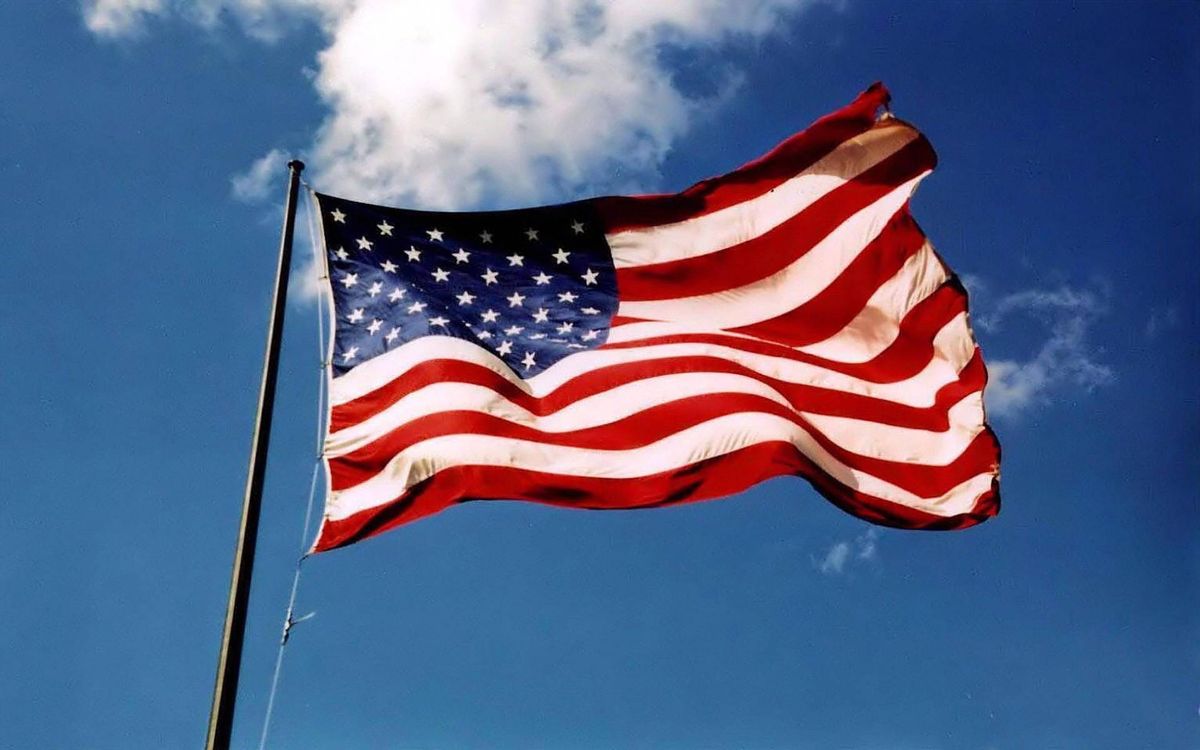
Official capital helps African states endure. Affective capital helps African households survive. Portfolio capital prices Africa without building it. Corporate capital builds, and it has not come.
A Re-Introduction to American Capital
Many Africans don't encounter American capital through dollar bills or other familiar channels. In fact, most of us who grew up in the heady seventies and turbulent eighties first met American capital through cans of sardines and Cornish beef, tinned chicken whose bones you could chew, but most likely through a jute sack. I still remember the yellow flour that came in bags marked with two clasped hands on a shield in Uganda, wrought by civil war and where the shops had little else. American capital for us, then, was food grown by American farmers, bought by the American state and given away. We were asked for nothing in return, and nothing about the economy we lived in had to change for the next consignment of food aid to arrive. I did not know it then, but I had met the first of the four faces of American capital.
Years later, I met another side of American capital. On Sixth Avenue in Manhattan, the National Debt Clock has run since 1989, and in October 2026, that clock read $40 trillion.[1]Interestingly, no sign shows what America owns. Only a Federal Reserve table, which almost nobody reads, lists the net worth of American households at one hundred and ninety-six trillion dollars. This figure is more than one and a half times the annual output of the entire planet.[2]
That is the room behind the keyhole, and our reintroduction to American capital begins there.
Read the position, not the flow. Flows are the year's announcements; the position is what stays. At the end of 2025, American direct investment abroad stood at 7.1 trillion dollars. Africa's share of this total was 37.9 billion, or 0.53 per cent. In 1983, it had been about 3.5 per cent.[3] The fall survives the obvious checks, the holding companies that now pad the American total and apartheid-era South Africa in the 1983 base among them, and the honest comparison is in constant dollars, where the American position in Africa has grown by roughly half since 1983 while the American position in the world has grown about tenfold. Africa did not stop receiving American corporate capital. It stopped keeping pace with it, by an order of magnitude. For example, Singapore, a city-state of six million with a harbour and a rulebook, hosts more than ten times the American presence of the whole continent.[4]
The Four Faces
The sack and the clock were not the same type of American capital. American money reaches Africa through four channels so unlike one another that lumping them under one ‘American capital’ category is an error.
The first channel is known as official capital, and it is the money of the American state, the flour and the tins at scale: upwards of 330 billion dollars was disbursed to Africa between 2001 and 2023, paid for in Washington's own currencies of alliances, stability, votes at the United Nations and lives saved and credited.[5]
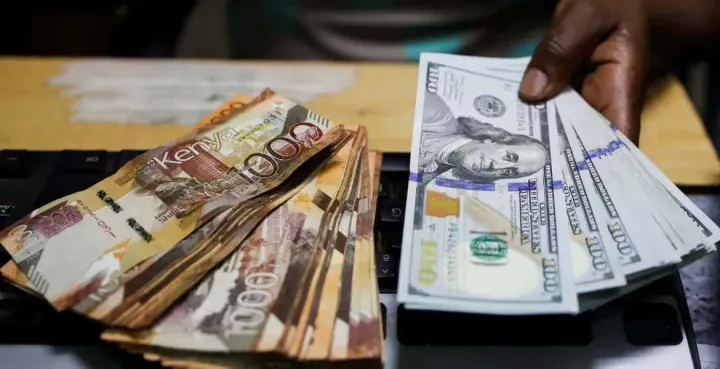
The second channel, affective capital, is the money of families and givers. The United States is the largest single source of the world's remittances, much of it earned in American cities by Africans, so part of American disinterest in Africa is African; the Gates Foundation's two hundred billion dollars, most of it for Africa, is the same face, a gift repaid by nothing.[6]
Portfolio capital is the money of funds buying paper, and it is the third channel. It wants its coupon, but never a board seat on either a greenfield or brownfield investment. Of the 171 billion dollars of African securities Americans held at the end of 2024, fifty-two billion was a single cruise line incorporated in Liberia.[7]
Corporate capital is the money a firm uses to buy control. It is the only face whose return can depend on Africa becoming more productive, because it owns the means of production. But what Africa has mostly met is the enclave, insulated from the surrounding economy: mining and holding companies make up most of the 37.9 billion.[8] Three of the four faces are money for eating. The fourth is money for business, and America sends Africa every kind of capital except the kind that makes Africa more productive.
The Luggage
Why is the fourth face so small? Because of the instrument it travels in. In 1932, Adolf Berle and Gardiner Means showed that the shareholders of America's largest corporations no longer ran them, and that a new institution had formed in the gap, with the lifespan of a dynasty and the capital of a small state.[9] American direct investment travels inside this instrument, and its character is fiduciary. Its managers deploy money belonging to strangers, mostly retirement savings, under a statute that forbids them to be generous, patriotic, or moved by need unless that serves the return. The corporation cannot love. That is a design specification.
Direct investment, as Stephen Hymer showed, is not money hunting yield but organisation. The firm extends its own productive system, under its own control, only where control can be exercised at acceptable cost, and where it cannot, the fiduciary does not misprice the territory. It declines it. In John Dunning's terms, what fails in Africa is not the firm's ownership advantage but location, and location means institutions: whether contracts can be enforced, earnings converted and forecasts written with a straight face.[10] When Procter and Gamble ended manufacturing at Agbara in 2023, its chief financial officer said conditions had made it difficult to create value in dollars. No one complained about Nigerians, and there was no doubt about the market. The words were fiduciary. Ford has built vehicles in South Africa since 1923.[11] No one was ever fired for not being first into Lagos.
Then comes the luggage Africans least expect, packed by American politics. The Foreign Corrupt Practices Act of 1977 made it a federal crime for any company listed in America to bribe a foreign official anywhere in the world, and it is not negotiable on the ground, because the firm's own directors cannot waive it.[12] American activity in bribe-prone countries declined after 1977.[13] The one kind of American capital that would need Africa to become more productive is the kind most allergic to Africa's insider economy, because it carries American law in its luggage.
The Other Side of the Table
Across decades of conversations with African businesspeople, I have heard the same proposition: the key to success is finding creative ways not to pay taxes, and having a godfather. In my doctoral work I called it the low-transaction-cost group: a small, connected circle for whom the cost of doing business is low because they are, in effect, the system.[14] An American firm can join that group only at legal peril. Membership is paid for in the currency the 1977 Act criminalises. The American corporation must transact on the published terms, and where published terms are a fiction, it cannot transact at all.
The standard African response, the tax holiday and the exemption negotiated for the investor in the room, makes this worse.[15] A negotiated exemption is a discretionary favour, and discretion is the insider's currency. The African state offers the American corporation a deal when what the corporation needs is a rule. A deal can be withdrawn by the next minister. A rule can be written into an operations manual and defended in court. This is why, across forty-nine countries, regulatory quality returned the largest test statistic of the six governance indicators I tested against American direct investment: an association, not a cause, but one with a mechanism.[16] A firm that can bribe its way around a bad rule has less need of a good one. A firm that cannot needs the rule itself to work.
The Three Decisions
Faced with a territory that fails the test, the American firm has three options. It declines, and no American textile, pharmaceutical, or electronics manufacturer operates at scale anywhere on the continent. It builds an enclave, the platform and the mine, but the enclave has been leaving. The American position in Africa peaked at about sixty-nine billion dollars in 2014 and has since fallen by nearly half; since 2016, sellers include Freeport in Congo, Anadarko in Mozambique, and ExxonMobil in Chad, Cameroon, and Nigeria.[17] Or it finds a partner. For a Ugandan, a Zambian or an Ivorian, the American corporation is a soft-drink bottler working under licence, a bank's correspondent line and an application on a telephone. The local partner handles institutional translation, and the corporation keeps the brand and the margin, so even the American presence Africans can point to is one whose return does not wait for their institutions to improve.
The rivals sharpen the point. Chinese capital cares about transactions, not whether a state is investable; it asks whether the state is executable, and that question fits the existing structure of power.[18] Africa's institutions do not repel all foreign capital. They mostly repel the capital that must transact on published terms. Since 2025, the luggage has been lightened, enforcement of the 1977 Act has paused, and the DFC has turned toward critical minerals, and so far it has sparked interest in what can be dug up and shipped out.[19] The luggage that kept the builder away also kept the enclave honest.
The Ideal Builder
Where American corporate capital has gone to build, it built. From 1963, a line in the American tariff schedule taxed only the value added abroad, and Fairchild went to Hong Kong and Texas Instruments to Taiwan; they stayed because the return depended on Asian workers learning to make the product, and the electronics industries of Taiwan, Singapore and Malaysia grew up around the plants.[20] America printed a coupon and its own corporations redeemed it. The edge of this capital is scale, the horizon that equity allows, the capability transfer that control compels, and the portability of its certificate. Reforming to satisfy the most demanding examiner is not Americophilia. It is sitting the examination whose certificate travels furthest.
Official capital helps African states endure. Affective capital helps African households survive. Portfolio capital prices Africa without building it. Corporate capital builds, and it has not come. It went to Singapore and stayed. It came to Agbara, ran its arithmetic and left. It does not need you to be lovable. It needs you to be governable.
Notes
[1]U.S. Department of the Treasury, Bureau of the Fiscal Service, "Debt to the Penny", 13 October 2026: US$40.34 trillion.
[2]Board of Governors of the Federal Reserve System, Financial Accounts of the United States (Z.1), 11 September 2026, Table S1M.b (formerly B.101): assets US$217.8 trillion, liabilities US$21.9 trillion, net worth US$195.9 trillion, end of the second quarter of 2026.
[3]U.S. Bureau of Economic Analysis, "Direct Investment by Country and Industry, 2025", July 2026, historical-cost basis: worldwide US$7,136.1 billion; Africa (BEA's Africa region) US$37.9 billion; holding-company affiliates 45.8 per cent of the worldwide position. The 1983 share and the constant-dollar comparison are the author's calculations from BEA's 1983 country positions, deflated by the consumer price index. The holding-company adjustment is a sensitivity test, not an adjusted share.
[4]BEA, "Direct Investment by Country and Industry, 2024", July 2025: Singapore US$468 billion at the end of 2024.
[5]U.S. Agency for International Development, U.S. Overseas Loans and Grants ("Greenbook"), obligations by country, historical dollars.
[6]World Bank and KNOMAD, Migration and Development Briefs (2024 and 2025); Gates Foundation, announcement of 8 May 2025; remarks by Bill Gates at the African Union, Addis Ababa, June 2025.
[7]U.S. Department of the Treasury, Federal Reserve Bank of New York and Board of Governors of the Federal Reserve System, Report on U.S. Portfolio Holdings of Foreign Securities as of December 31, 2024; Royal Caribbean Cruises Ltd., Form 10-K, fiscal year 2024.
[8]BEA, U.S. direct investment position by country and industry of affiliate, Africa, 2025. The industry detail is published with suppressions and ranges, which is why a composition is given rather than a figure.
[9]Adolf A. Berle and Gardiner C. Means, The Modern Corporation and Private Property (New York: Macmillan, 1932); Employee Retirement Income Security Act of 1974, Pub. L. 93-406, section 404(a); Investment Company Institute, Quarterly Retirement Market Data, 2025.
[10]Stephen H. Hymer, The International Operations of National Firms: A Study of Direct Foreign Investment (Cambridge, MA: MIT Press, 1976), from the 1960 thesis; John H. Dunning, "Toward an Eclectic Theory of International Production", Journal of International Business Studies11, no. 1 (1980): 9 to 31; John H. Dunning and Sarianna M. Lundan, Multinational Enterprises and the Global Economy, 2nd ed. (Cheltenham: Edward Elgar, 2008).
[11]Procter & Gamble, remarks by Andre Schulten, Chief Financial Officer, Morgan Stanley Global Consumer and Retail Conference, New York, December 2023; Ford Motor Company, "Ford Invests $1.05 Billion in South African Manufacturing Operations", 2 February 2021.
[12]U.S. Department of Justice and U.S. Securities and Exchange Commission, A Resource Guide to the U.S. Foreign Corrupt Practices Act, 2nd ed. (2020); OECD Anti-Bribery Convention, 17 December 1997; Dodd-Frank Act, Pub. L. 111-203, section 1502 (2010).
[13]James R. Hines Jr., "Forbidden Payment: Foreign Bribery and American Business After 1977", NBER Working Paper 5266 (1995); Alvaro Cuervo-Cazurra, "Who Cares about Corruption?", Journal of International Business Studies 37, no. 6 (2006): 807 to 822; Quintin H. Beazer and Daniel J. Blake, "The Conditional Nature of Political Risk", American Journal of Political Science 62, no. 2 (2018); Lorenzo Crippa, "Do Corporate Regulations Deter or Stimulate Investment?", Review of International Organizations 20 (2025): 415 to 441.
[14]R. H. Coase, "The Nature of the Firm", Economica 4, no. 16 (1937); Oliver E. Williamson, The Economic Institutions of Capitalism (New York: Free Press, 1985); Dennis Matanda, "The Impact of Corporate Governance on U.S. Direct Investment Abroad (USDIA) to Africa" (DBA dissertation, Northcentral University, 2022; ProQuest no. 29064555), Table 8: a Kruskal-Wallis H test across forty-nine sub-Saharan African countries, 2000 to 2019, grouped by scores on each of the six Worldwide Governance Indicators, against the United States direct-investment position in each. Regulatory Quality returned H = 60.372 (df 8, N 639), the largest of the six; five of six were significant at p < .001 and all six are reported. The test establishes that groups differ; it estimates neither a coefficient nor an effect size, and it did not include resource endowment, market size or labour cost as comparators.
[15]IMF, OECD, UN and World Bank, Options for Low Income Countries' Effective and Efficient Use of Tax Incentives for Investment, report to the G20 Development Working Group (2015).
[17]U.S. Bureau of Economic Analysis, U.S. direct investment position abroad, Africa, 2014 to 2025, historical-cost basis, with mining (including oil and gas extraction) accounting for most of the climb and the fall; Freeport-McMoRan, completed sale of its interest in Tenke Fungurume Mining to China Molybdenum, November 2016; Total S.A., completed acquisition of Anadarko's 26.5 per cent interest in Mozambique LNG, September 2019; Savannah Energy, completed acquisition of ExxonMobil's Chad and Cameroon assets, December 2022; Seplat Energy, completed acquisition of Mobil Producing Nigeria Unlimited, December 2024.
[18]Boston University Global Development Policy Center, Chinese Loans to Africa Database, 2000 to 2024: more than 1,300 commitments worth about US$181 billion. Nothing here depends on the "debt-trap" quarrel; the classification turns on what the return requires of the borrowing economy, not on the lender's motive.
[19]Executive Order 14209, 10 February 2025, and U.S. Department of Justice, Guidelines for Investigations and Enforcement of the Foreign Corrupt Practices Act, 9 June 2025; DFC Modernization and Reauthorization Act of 2025, raising the portfolio cap to US$205 billion and widening the remit towards critical minerals; Continuing Appropriations and Extensions Act, 2027, Pub. L. 119-103, section 2008, extending AGOA only to 31 December 2028.
[20]Chris Miller, Chip War: The Fight for the World's Most Critical Technology (New York: Scribner, 2022), on the offshoring of semiconductor assembly from 1963; Item 807.00 of the Tariff Schedules of the United States, under which duty was charged only on the value added abroad to American-made components; Beata Smarzynska Javorcik, "Does Foreign Direct Investment Increase the Productivity of Domestic Firms?", American Economic Review 94, no. 3 (2004): 605 to 627, on supplier-chain spillovers.
Comments ()